
2025 Sustainability Audit Report
A Roadmap for Local News Sustainability


Building Stage
What Can Be Done
Over half (54 percent) of the organizations that participated in the Audit found themselves in the Building stage. These organizations had enough infrastructure and revenue to pay more contributors and hire full-time staff. They were starting to use their historical organizational and financial data to inform the future planning and budgeting. They also were developing systems to ensure that they would meet their mission.
However, challenges remained, both in maximizing areas of strength and implementing key activities that are characteristic of more advanced stages.
Building organizations have generally achieved foundational work and began building systems, but the challenge is ensuring the systems are operational and efficient.

Percent of organizations selecting that they have each key indicator, by stage
Activites by Pillar

Stage:
Building

Pillar:
Operational Resilience
Staffing Up
Over half of these organizations had two key Operational Resilience activities in place: a payroll system and flexible work hours. Both indicate growth in staff. Staff growth is a major point of progress at this stage, as it enables an organization to move forward in every area of sustainability.
A total of 54 percent of Building organizations had a payroll system in place. The 54/46 ratio is similar among organizations at this stage that had staff and those that did not. Among organizations that didn't have a payroll system, the average number of full-time employees was 0.5 and the median revenue was $34,550, while those that had a payroll system had 2.4 full-time employees on average with a median revenue of $160,296. The organizations with a payroll system also tended to have additional practices in place to support staff, with an average of twice as many key indicators in place.
This split reflects a delineation within this stage — some had generated enough revenue to hire staff, creating the need for supporting systems, and some had not. As an illustration, when we look at the median difference in revenue for organizations that didn't have a payroll system when they took the Audit, but implemented one over the course of the program, we see notable revenue growth. Ten organizations added a payroll system from one phase to the next, and their median revenue more than doubled, from about $16,000 (below the median) to almost $52,000, implying that somewhere in that range is when operations are large enough to necessitate introducing this practice.
Median revenue grew by over 200% for the 11 organizations that added a payroll system, while total paid contributors tripled.

The shift to a payroll system can have an impact on an organization beyond adding legitimacy to operations. On a policy level — though it's not yet national — there are efforts at state levels for payroll tax credits for journalists. If a publisher isn't on a payroll system they may struggle to supply the documentation needed to claim that credit.
About two-thirds of Building organizations offered flexible work hours, a relatively easy practice that simply requires a policy or agreement with employees and contributors. Offering flexible work hours is likely to be a signal of growth — something that organizations are able to offer staff once a newsroom is better established — rather than a factor that facilitates growth. However, it could still indirectly facilitate growth in the long-term by reducing burnout and turnover and increasing overall institutional knowledge and experience.
Stage:
Building

Pillar:
Financial Health
Planning Ahead
Building organizations had a better handle on financial documents and processes, particularly forward looking ones. Major activities such as developing annual revenue goals, an annual budget process, and budget documents, as well as maintaining a balance sheet, were implemented by between a third and nearly half of Building organizations (compared to fewer than 15 percent of organizations in the Preparation stage.)
Nevertheless, adoption of best financial practices was still lacking. Implementation of bookkeeping practices was the only key activity among more than half of the Audit-takers.
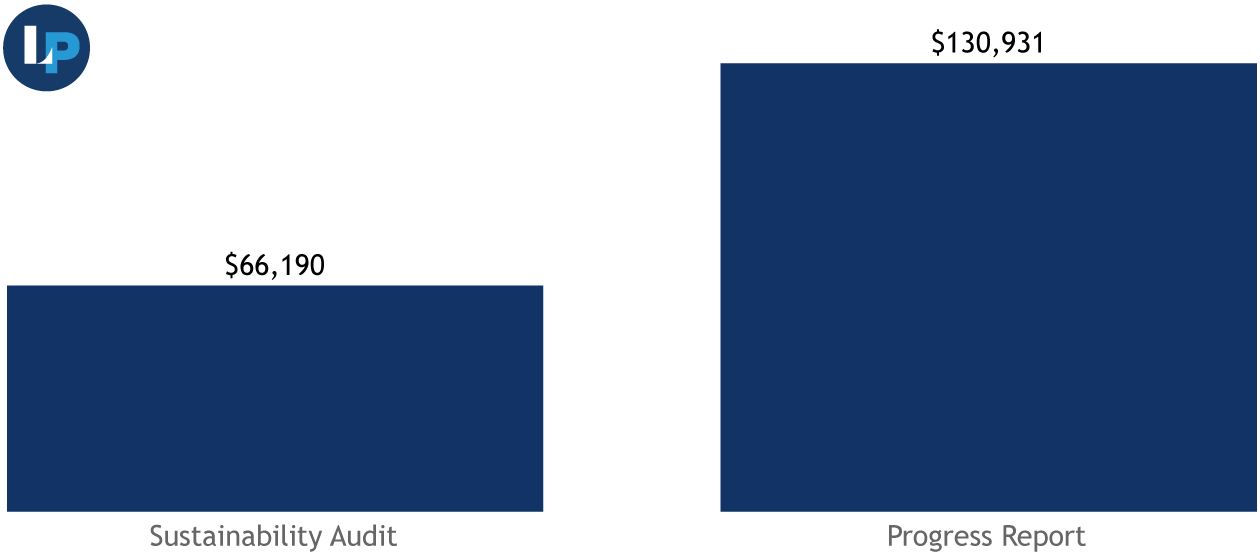
Establishing a budgeting process and annual revenue goals is a major opportunity for Building organizations, as both are hallmarks of the higher stages and reflect a keen sense of where an organization is and where it should be headed. If an organization has a strong handle on its revenue and spending, as well as enough operational infrastructure, it can begin strategizing for revenue diversification and, crucially, hiring staff dedicated to generating revenue. Twenty three organizations added annual revenue goals to their practices after the Sustainability Audit, and their median revenue grew significantly.
Median revenue grew by over 98% for the 23 organizations that added annual revenue goals
Case Study

The Excelsior Citizen
Excelsior Springs, MO
Year
Audit
Stage
Operational
Resilience
Financial
Health
Journalistic
Impact
2022

Building

Preparation
Building
Building
2023
Building
Building
Building
Building
2025

Maintaining
Maintaining
Maintaining
Maintaining
A for-profit serving Excelsior Springs, Missouri, The Excelsior Citizen is a model of slow, steady growth built on sustainability best practices.
“Our growth to this point has been both intentional and guided by the insights we’ve gained through LION’s Audit,” says Courtney Cole, The Excelsior Citizen’s founder. “The Audit clearly outlined the areas we needed to strengthen, not just in our reporting, but also in our business operations, brand presence, and the way our website functions to drive both readership and revenue.”
The Citizen has steadily pursued foundational indicators, advancing multiple pillar stages between each Sustainability Audit. “The combination of focused strategic planning and building internal systems has been critical in accelerating our growth,” notes Cole.
The Excelsior Citizen has seen notable progress as they’ve moved from a Building to Maintaining organization, including in revenue growth — from $8,500 to $32,000 to $157,000 across three assessments — and a 170 percent increase in newsletter subscribers at the same time.
“One of the most valuable takeaways was the ability to prioritize. Having a clear roadmap of what to address first allowed us to focus on the highest-impact changes without feeling overwhelmed. From there, we implemented systems for content planning, streamlined our advertising processes, and optimized our website for both user experience and monetization. These steps have created a solid foundation for sustainable growth, helping us work smarter, stay organized, and focus our energy where it makes the biggest difference.”
What advice does Cole have for other founders?
“It’s easy to get caught up in the day-to-day grind and push off the tasks that truly move your business forward. Participating in the LION Audit was transformative for us because it forced us to carve out dedicated time to focus on those high-impact priorities. The program provided a structured, productive framework for setting clear goals, establishing deadlines, and celebrating progress along the way. Beyond the Audit, one of our most impactful steps was compiling an Employee Handbook. This document outlined our services, defined our team’s needs, and set clear roles and expectations. Having that foundation gave us the confidence to grow our team, leading to two new hires, and positioned us for long-term success.”
Stage:
Building

Pillar:
Journalistic Impact
Learning from Your Audience and Mission
Organizations in the Building stage were slightly more advanced in adopting key Journalistic Impact practices than organizations in the earlier stage. However, practices for defining, tracking and using impact data — which add up to a system for understanding impact — were not widely adopted. Only four in 10 organizations used one or more of these practices.
These practices do not appear to contribute directly to revenue growth. However, when implemented in conjunction with key indicators across the other sustainability pillars, grounding strategy in Journalistic Impact plays a role in revenue growth. For example, organizations that added these practices saw revenue growth. A total of 33 Building organizations added a definition of Journalist Impact between the two phases, while 39 began tracking it and 34 began using the data. The median revenue for organizations that added any of these practices grew by about 145 percent.
Overall, we found that while a single impact practice might be in use at this stage, organizations had not necessarily combined them to form a full-fledged system. Such systems were more characteristic of the more advanced stages.



Contact
If you’re interested in learning more about the data in this report, please email LION’s Director of Data and Evaluation, Chloe Kizer at chloekizer@lionpublishers.com.
If you’re interested in learning how the LION Sustainability Audit can help the news businesses you work with, please reach out to Andrew Rockway at andrewrockway@lionpublishers.com.