
Funders reveal what makes grant applications stand out
Standing-room-only session at the 2025 Summit revealed five tips from philanthropy officers who help decide the fate of funding proposals.
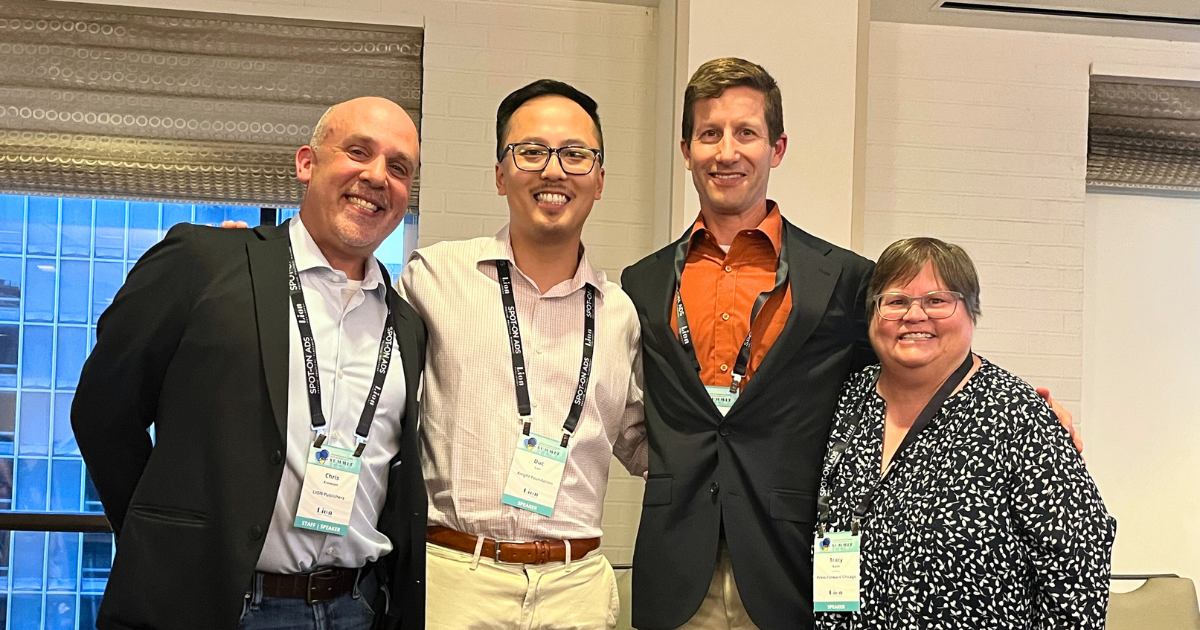
We knew independent news publishers would value the chance to question funders about how grants could support their operations, so we planned a special session at the 2025 Independent News Sustainability Session on that very topic. Thanks to intense demand, we had to keep adding more seats until we risked exceeding the room’s capacity.
And this session, generously sponsored by BlueLena, lived up to expectations. We brought together three funders to share practical advice, their vision for what a sustainable journalism ecosystem could look like, and their plans for achieving it. Duc Luu, director of business sustainability grantmaking at Knight Foundation; Tracy Baim, executive director of Press Forward Chicago; and Stefan Lanfer, director of communications at Barr Foundation, took the stage with moderator Chris Krewson, executive director of LION.
If you couldn’t join us on the evening of September 4 for this event, we’re sharing answers to two of the top questions, starting with a big one submitted from the audience.
The following excerpts have been edited for length and clarity.
Chris: “When applying for a grant, what do journalists often get wrong in the process?“
Tracy: Our most recent request for proposals was really clear about the purpose of this funding, and unfortunately, many of the organizations that applied didn’t read exactly what it was for. And beyond that, following grant guidelines is great, but working with a professional grant writer is advised. They know the buzzwords, and if they’re familiar with the ecosystem, they’ll know what a particular funder is looking for. I’ll also say that collaborations are really appealing; so if there is an editorial project you want to get funded, doing that in partnership with other newsrooms is, I think, more likely to get funded.
Duc: At Knight, we’re a national funder interested in the journalism ecosystem as a whole. And as such, I’m looking for two things: 1) What do you do and what do you know that others don’t about building your business and serving your community in new and interesting ways? Tell me what you’re doing exceptionally well that other newsrooms can learn from. And 2) I believe that our industry believes that we’re a consumer staple, like toothpaste or deodorant, something that everyone uses because they need it. But I’d argue that the average person thinks of us more as a consumer discretionary product. We do not get to decide that we’re important –– our audiences do, our communities do. Who in your community needs you, and what is the evidence of that? Pair ‘I do this thing really well’ with ‘this is why/how my audience needs me’ to build a strong case.
Stefan: Whether it’s an application or a series of conversations, you’ll have an advantage by applying some of the tools and principles of journalism to your pitch. Start by knowing your audience, and understand that for a funder audience, they’re looking for projects that support their mission. So really get to the bottom of what they’re trying to accomplish. What’s their strategy, and where does your work fit well with that? Then show, don’t tell. Show me your mission and your impact on your community; that’s where it’s going to resonate with a funder, especially if they share a commitment to that community.
Chris: I’d love to hear about some unexpected successes, projects you were on the fence about but that succeeded wildly, other wins, or future plans.
Tracy: Thirteen first-round grantees pre-dated me, and they’re in a peer learning community now. I see this as a great success because they’re learning from each other; the collaborative spirit in Chicago has always been strong, but staying collaborative is the way forward. The pie will grow bigger; it already has. We’re also developing a geographically-based method for organizations to participate in the ad ecosystem. This has been a dream of mine for years, and 30 outlets have agreed to be part of this collaboration so far. It’s a different model because it spans across various ethnic groups, whereas previous media representation groups were usually organized around a common identifier. It’s not too unusual, but we’re coming together. It’ll be a failure if everyone becomes a nonprofit and philanthropy moves on in three to five years, so we need to diversify across different revenue streams and within those streams. It’s not guaranteed to work, but a lot of ad dollars are still being spent, so this could be a possible future.
Duc: I think one roaring success is the idea that publishers should focus on reader revenue. Five years ago, we were trying to persuade people to do this; now we have BlueLena, Tiny News Collective, and others who have paved the way. If you’re a newsroom operator trying to figure out where to begin, there’s a clear roadmap and the tools to make it happen. Another win is figuring out and expanding who gets to be counted as a journalist. We now have the Documenters program, for example, and the incorporation of student journalists into the newsroom and talent pipeline. What students can do in terms of perspectives, what should be covered in the community, how to cover it, and how to present it to their generation is a game-changer. Take AI. I guarantee that how these students are using AI and the assumptions, expectations, and habits they’re developing now will shape how news will be delivered five years from now. There are plenty of emerging signs here of new reporting capacity, new ways of diversifying revenues, and easier methods to do so than even five years ago.
Stefan: I think supporting LION and entering the journalism funding space is just really exciting; this is a new area for us, and we’re glad to be part of it. (Read more about Barr Foundation’s support here.)
Huge thanks to Duc, Tracy, and Stefan for sharing their insights and time with us. Interested in this topic or exploring other ways to generate revenue?
- Mark your calendar for Summit 2026, September 9-11, in San Diego. Ticketing information will be available soon, and potential sponsors can contact us at sponsorships@lionpublishers.com.
- Join us for a Virtual Vendor Fair on November 19, where you’ll have the opportunity to hear from vendors who help local publishers boost their revenue streams. Tickets will be available in October.
Related Articles
Why LION is getting out of the big-conference business (for now)
An FAQ of sorts about how we’re setting our sights on different ways to convene in 2027
LION now accepting applications from for-profit news businesses for free HR and financial consulting
Open to newsrooms, solopreneurs, and creators, get a customized, cost-effective plan to run your business more efficiently.
Meet the 17 winners of the 2026 LION Sustainability Awards
We celebrated the 2026 LION Publishers’ Sustainability Awards at the Independent News Sustainability Summit in San Diego.